

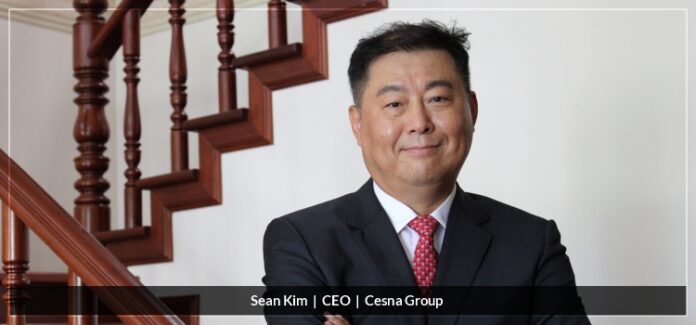

In an era where talent defines competitive advantage, recruitment has evolved far beyond transactional hiring. It now sits at the intersection of strategy, culture, and global mobility. Among the firms shaping this transformation, Cesna Group stands out—not merely for its longevity since 1999, but for how it has consistently reimagined the architecture of executive search across continents.
Headquartered in New Jersey with a strong operational footprint spanning the United States, Korea, China, Thailand, and Southeast Asia, Cesna Group has carved a niche in cross-border talent acquisition. At the center of this growth story is CEO Sean Sung-min Kim, whose career has been defined by a singular focus: identifying leadership talent capable of navigating complexity in a deeply interconnected world.
A Philosophy Rooted in “Global Synergy”
Cesna’s trajectory is anchored in what it calls its “Global Synergy” philosophy—a framework that blends localized expertise with a unified global strategy. While many recruitment firms expand internationally by replicating a central model, Cesna took a more nuanced approach. It invested early in understanding regional business cultures, labor dynamics, and linguistic subtleties.
This has translated into a hybrid operational model: centralized quality standards combined with localized execution. Whether hiring for a manufacturing firm in Thailand or a tech startup in Silicon Valley, Cesna ensures that its consultants operate with both global perspective and regional fluency.
The numbers reinforce this strategy. With over 10,000 successful placements and more than 5,500 global clients served, the firm has built not just scale, but credibility. Its client base spans Fortune 500 corporations and high-growth mid-sized enterprises—organizations that increasingly require talent capable of operating across borders.
Leadership That Goes Beyond Placement
At the heart of Cesna’s success lies its specialization in executive search and mid-to-senior level recruitment. Unlike high-volume staffing firms, Cesna operates in a space where precision matters more than speed.
The firm’s methodology begins with what it terms a “Success Profile”—a comprehensive blueprint that aligns role requirements with organizational culture and long-term strategy. This is not a superficial job description exercise. It involves deep consultation with stakeholders to define what success truly looks like in a given role.
From there, the process becomes highly targeted. Leveraging a proprietary global database alongside proactive headhunting techniques, Cesna identifies passive candidates—those not actively seeking new roles but open to the right opportunity. This focus on passive talent is critical in executive search, where the best candidates are rarely on the market.
Candidates then undergo rigorous evaluation, including competency-based interviews and cultural fit assessments. The emphasis on cultural alignment is particularly noteworthy. In cross-border hiring, technical expertise alone is insufficient; adaptability, communication style, and leadership philosophy often determine long-term success.
Industry Expertise Meets Linguistic Intelligence
One of Cesna’s defining differentiators is its specialized consultant model. Rather than adopting a generalist approach, the firm organizes its teams into industry-specific verticals, including technology, finance, manufacturing, healthcare, and sales and marketing.
This structure allows consultants to function as subject matter experts, equipped with deep knowledge of industry trends, regulatory environments, and skill requirements. For clients, this translates into more informed hiring decisions and reduced time-to-fill for complex roles.
Equally important is Cesna’s multilingual capability. Its consultants are fluent in multiple languages, including English, Korean, Mandarin, Cantonese, Thai, and Japanese. This linguistic diversity is not merely a convenience—it is a strategic asset.
Conducting interviews and assessments in a candidate’s native language enables deeper insights into their motivations, communication style, and cultural compatibility. It also enhances trust, a critical factor when engaging senior-level talent.
Technology as a Strategic Enabler
While recruitment remains a fundamentally human-centric business, Cesna has embraced technology as a force multiplier. Its proprietary Odyssey database serves as a central intelligence hub, enabling consultants to scan global talent pools with speed and precision.
In addition to internal tools, the firm actively leverages digital platforms and real-time market data. Its annual salary guides, for instance, provide clients with actionable insights into compensation benchmarks and talent availability across regions and industries.
This data-driven approach allows Cesna to move beyond intuition, offering clients evidence-based recommendations that enhance hiring outcomes. In a market where misaligned compensation can derail recruitment efforts, such insights are invaluable.
Navigating the Complexities of Cross-Border Hiring
Global talent acquisition is fraught with challenges—from regulatory differences and language barriers to varying cultural expectations around hiring processes. Cesna addresses these complexities through a “single point of contact” model.
For multinational clients, this means working with a unified team that coordinates hiring efforts across geographies while maintaining consistent quality standards. Behind the scenes, Cesna’s consultants leverage their cross-cultural training to adapt strategies based on local norms.
For example, hiring in Korea may require a more formal and hierarchical approach, while recruitment in the United States often prioritizes speed and flexibility. By calibrating its processes accordingly, Cesna ensures that clients can navigate diverse markets without compromising on efficiency or candidate experience.
A Holistic Approach to Talent Ecosystems
What truly sets Cesna apart is its evolution from a recruitment firm into a strategic HR partner. Beyond placements, the company offers a suite of value-added services designed to support both clients and candidates throughout the entire talent lifecycle.
For organizations, this includes market mapping, organizational consulting, and salary benchmarking—tools that inform workforce planning and talent strategy. For candidates, Cesna provides career advisory services, interview coaching, and relocation support, particularly for cross-border moves.
This dual focus reflects a broader shift in the recruitment industry. Success is no longer defined solely by placements, but by the ability to create sustainable talent ecosystems where both employers and professionals can thrive.
Leadership with Global Impact
Under Sean Sung-min Kim’s leadership, Cesna has not only expanded geographically but also elevated its brand reputation. The firm has been recognized among the “50 Best Workplaces of the Year” and has received the Consumer Satisfaction Brand Award in South Korea.
Kim himself has been honored as one of the “Outstanding 50 Asian Americans in Business” in New York City—an acknowledgment of his influence in shaping global talent strategies. His contributions extend beyond business operations; through published market research, he has helped inform industry discourse on compensation trends and workforce dynamics.
The Road Ahead
As businesses continue to globalize and digital transformation reshapes industries, the demand for agile, culturally fluent leadership will only intensify. Recruitment firms that can bridge geographic and cultural divides will play a pivotal role in this landscape.
Cesna Group appears well-positioned to lead this charge. Its combination of industry specialization, technological integration, and cross-cultural expertise offers a blueprint for modern recruitment.
Yet, perhaps its most enduring strength lies in its philosophy. By viewing recruitment not as a transactional function but as a strategic partnership, Cesna has redefined what it means to connect talent with opportunity.
In doing so, it has not only built careers and organizations—it has built bridges across some of the world’s most dynamic markets.